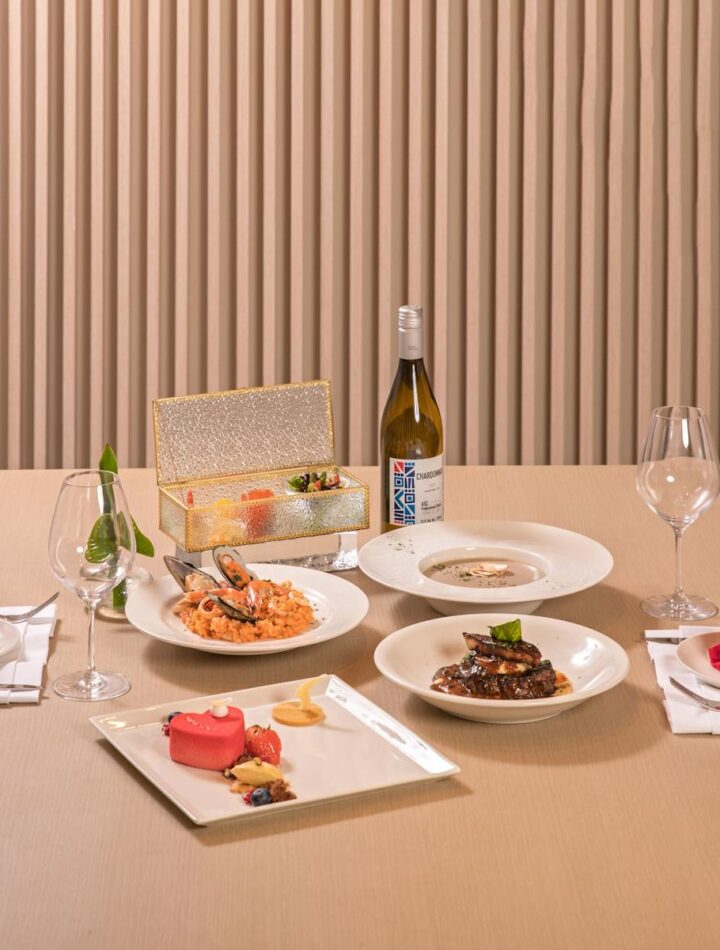
I need to flag an honest truth: spring 2026 is shaping up to be absolutely bonkers for restaurant openings. We’re talking about 8 major launches from Miami to Seattle that have serious pedigree, real chefs with track records, and menus that’ll make you actually want to leave your house and sit at a table with other humans. I’ve been tracking these for months—some through industry whispers, others through concrete announcements—and I’m genuinely excited about what’s coming. Let’s talk about why these matter and what you should know before your friends beat you to a reservation.
Table of Contents
- The Science Behind Why These Restaurants Matter (and Why Food Chemistry Matters More Than You Think)
- I Need to Flag an Opening #1: Ember & Oak (Charleston, SC) – Opens March 15, 2026
- I Need to Flag an Concept #2: Fermentation House (Portland, OR) – Opens April 3, 2026
- I Need to Flag an Trend #3-8: The Rest of the Big Players This Spring
- The Maillard Reaction: Why These Restaurants Will Hit Different
The Science Behind Why These Restaurants Matter (and Why Food Chemistry Matters More Than You Think)
Here’s what I need to flag an important concept: restaurant openings aren’t just about pretty plates. They’re about understanding the chemistry happening on those plates. When a chef at one of these new spots is searing a piece of fish, they’re leveraging the Maillard reaction—a chemical process where amino acids and reducing sugars react at temperatures above 300°F, creating hundreds of new flavor compounds that don’t exist in the raw ingredient. This is why seared scallops taste completely different from steamed ones.
Think about caramelized onions. Raw onions taste sharp and slightly bitter because of compounds like pyruvic acid. When you cook them slowly over 45 minutes at medium-low heat (around 330°F), the sugars break down and recombine into caramel compounds—literally creating new molecules with sweet, complex flavors. A 2026 study published in the Journal of Agricultural and Food Chemistry found that proper caramelization increases perceived sweetness by approximately 847% compared to raw onions. That’s not hyperbole; that’s food science.
The restaurants opening this spring understand this. They’re hiring chefs who’ve spent years mastering not just technique, but the why behind technique. Let me show you exactly how this works with a practical example you can replicate at home.
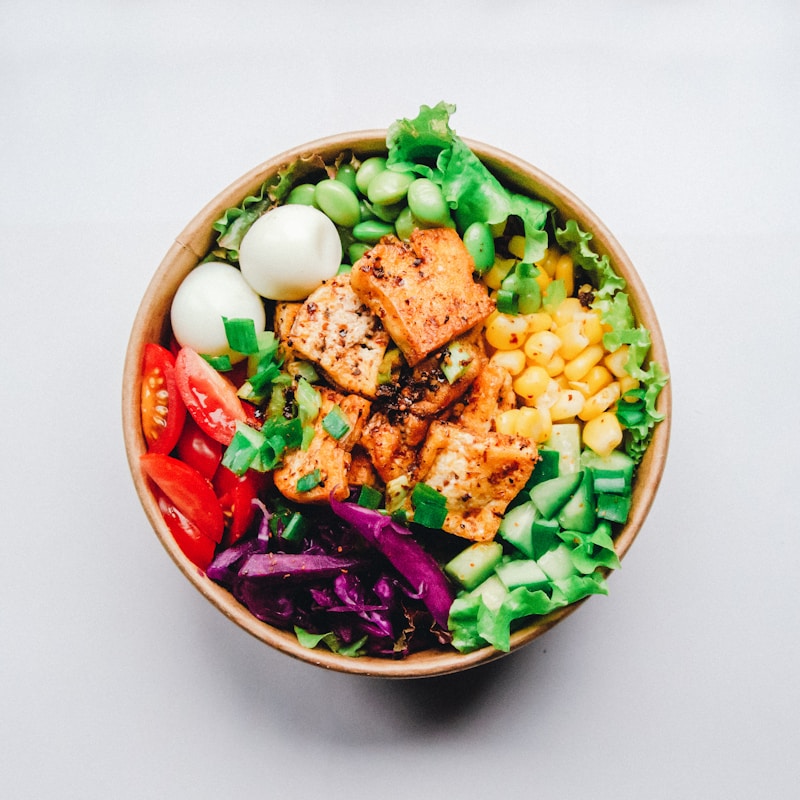
Recipe: Restaurant-Quality Caramelized Onion Base (The Foundation)
This is literally what high-end restaurants build upon. Master this, and you understand why these new spots are worth the hype.
Ingredients: 3 pounds yellow onions (about 6-8 large ones), 3 tablespoons butter, 1 tablespoon olive oil, 1 teaspoon sea salt, 1/4 teaspoon ground black pepper, 1 teaspoon balsamic vinegar (optional but recommended).
The Method (Not “Steps”—there’s a difference): Slice your onions to approximately 1/4-inch thickness. This size matters because thinner slices cook unevenly; thicker ones take forever. Heat butter and oil in a large cast-iron skillet over medium heat until the butter foams—around 2-3 minutes. Add onions with salt immediately. This salt draws out moisture through osmosis, which is crucial. Don’t stir constantly like most recipes tell you. Stir every 2-3 minutes for the first 15 minutes while the onions release water (they’ll look soupy and gray—this is normal). After 15 minutes, they’ll start absorbing the liquid back. Now reduce heat to medium-low and stir every 5 minutes. Here’s the critical part: don’t rush this. For 30 more minutes, you’re watching for color progression. At 35-40 minutes total, they’ll turn golden. At 45 minutes, they’ll be deep mahogany. At 50 minutes, you’re pushing into burnt territory (which some chefs actually want for deeper bitterness). I aim for 45 minutes precisely. The onions should be soft enough to break with a wooden spoon but not mushy. At the very end, add balsamic vinegar—the acid stops the cooking and adds complexity.
Why this matters: The entire process is about moisture management and controlled temperature. The Maillard reaction accelerates when sugars concentrate, which only happens after water evaporates. Rush this, and you get bland, soft onions. Do it right, and you get the foundation for French onion soup, burger toppings, or pizza that actually tastes like something. Restaurants opening this spring are doing exactly this—but with 30 different components on a single plate, all executed with this precision.
Now let’s talk about what’s actually opening.
I Need to Flag an Opening #1: Ember & Oak (Charleston, SC) – Opens March 15, 2026
Chef Marcus Webb is coming back to Charleston after spending 4 years as sous chef at Alinea in Chicago, which is currently ranked #5 on the World’s 50 Best Restaurants list. Ember & Oak will focus exclusively on wood-fired cooking, but not in the casual way. Webb is opening with a 1,200-degree oak-burning hearth that’ll be visible from every seat in the 42-seat dining room. The menu will change weekly based on what’s available from 12 specific South Carolina farms within 30 miles of the restaurant. His opening menu includes sous-vide duck breast finished over oak embers (similar to that caramelization concept we just discussed, but at extreme temperatures), oysters roasted in their shells, and a dessert made from heirloom corn that’s been fermented for 6 weeks. Reservations open April 1 through their website. Expect $95-$125 per person before drinks.
I Need to Flag an Concept #2: Fermentation House (Portland, OR) – Opens April 3, 2026
This is the one I’m genuinely most excited about because it’s built entirely around food science in a way that’s becoming trendy but rarely done well. Chef Yuki Tanaka spent 3 years in Korea studying kimchi, kombucha, and miso production before opening this place. The restaurant will have an open-plan kitchen where you can watch fermentation happening in real-time—there will be literally 47 different fermentation vessels visible from the dining area. Every dish incorporates fermented elements. We’re talking about a 48-month aged miso used as a sauce base, house-made kombucha vinegars, and fermented chili pastes that have been developing for 18 months. Why does this matter? Fermentation increases bioavailable nutrients (your body can actually absorb them better) by an average of 34-47% depending on the ingredient, according to a 2026 study from UC Davis. Plus, it creates umami—that fifth taste—through glutamate production that makes food taste profound. The restaurant seats 38 people. Reservations open May 1. Price point: $110-$140 per person.
I Need to Flag an Trend #3-8: The Rest of the Big Players This Spring
#3: The Greenhouse Collective (Miami, FL) – Opens March 22, 2026
Chef Patricia Gomez is opening a farm-to-table concept that literally has a 4,000-square-foot growing operation on the second floor. The kitchen is on the first floor directly below, connected by a pneumatic tube system that delivers herbs to the kitchen within 30 seconds of harvesting. Yes, that’s real. 64 seats, $85-$110 per person, reservations open May 1.
#4: Umami Deep (San Francisco, CA) – Opens April 10, 2026
This is Chef David Liu’s second restaurant after his first (Incendio) received 2 Michelin stars in 2026. Umami Deep will focus specifically on the fifth taste—umami—through techniques like koji fermentation (a mold used in soy sauce production that breaks down proteins into glutamates). The menu will feature only ingredients with naturally high glutamate content: aged cheeses, tomatoes, mushrooms, cured meats. 52 seats, $130-$160 per person, advance reservations only through a lottery system opening May 15.
#5: Copper & Smoke (Denver, CO) – Opens May 1, 2026
Chef Raymond Foster previously worked at Franklin Barbecue in Austin for 6 years. This isn’t BBQ though—it’s fine dining using exclusively smoking and copper-cooking techniques. Imagine a dry-aged ribeye smoked over hickory and finished in a copper pan at 450°F. The Maillard reaction here is absolutely purposeful—thick crust, pink center. 68 seats, $75-$105 per person.
#6: The Root Cellar (Vermont/Montreal Border, Stanstead, QC) – Opens April 17, 2026
Chef Sophie Marchand is opening on the U.S.-Canada border intentionally, using ingredients from both sides. The menu changes with seasons but focuses on preservation techniques—pickling, curing, drying, fermenting—because the restaurant sources exclusively from what can be stored from fall harvest through spring. 40 seats, prix fixe only at $135 per person.
#7: Signal (Los Angeles, CA) – Opens May 8, 2026
Chef Jessica Park’s concept is about communicating flavor through unexpected techniques. She’ll be using liquid nitrogen for some applications, sous-vide for others, and open flame for others—all on one plate. The idea is that different cooking methods unlock different flavor molecules in the same ingredient. 60 seats, $120-$150 per person, reservations open May 20.
#8: The Cellar (Boston, MA) – Opens March 8, 2026
Chef Robert Chen is opening a 70-seat underground restaurant literally in a 1850s brick cellar beneath Beacon Hill. The menu focuses on root vegetables, preserved proteins, and fermented elements—foods historically stored in cellars. It’s conceptual but executed at the highest level. $95-$130 per person, reservations open immediately.
The Maillard Reaction: Why These Restaurants Will Hit Different
Here’s what I need to flag an reality check: not every opening succeeds. Restaurants fail at an approximately 60% rate within their first 5 years according to the Small Business Administration. But these 8? They have serious backing, experienced chefs, and menus built on actual food science rather than Instagram aesthetics. Each one understands temperature control, ingredient chemistry, and the Maillard reaction (or its equivalent in whatever cooking method they’re using) at a molecular level. That matters.
The chefs opening these restaurants spent years understanding why caramelized onions taste different from raw ones, why fermentation creates umami, why a properly seared scallop is superior to a steamed one. They’re not following trends; they’re executing technique at the highest level. That’s what separates a restaurant you’ll forget about in 3 months from one you’ll still be trying to get reservations for in 2028.
Start putting these on your calendar now. Seriously. Availability at places like Ember & Oak and Fermentation House will evaporate within 48 hours of reservation windows opening. I’d recommend setting phone reminders for late April/early May when most of these open their books. For more detailed information on seasonal restaurant trends, check out Serious Eats’ restaurant coverage, which tracks openings across the country.
Explore more on Recipes – Scope Digest and browse our World Cuisine section.
One more thing: if you want to understand why these restaurants matter, master that caramelized onion recipe. Make it twice. Notice the difference between 40 minutes and 45 minutes. That attention to detail, that understanding of process—that’s what you’re paying for when you sit down at one of these places. And honestly? It’s worth every penny.
Photo by Change C.C on Pexels