Table of Contents
- The Sous Vide Technique Deep-Dive: Why Dallas’s Best Restaurants Are Using It
- I Need to Point Out the Hottest Fine Dining Spots Taking Over Dallas
- Where to Find Underrated Neighborhood Gems I Need to Point Out
- I Need to Point Out Why These Casual Spots Actually Matter More Than You Think
- The Recipe: Perfectly Cooked Beef Tenderloin Using Sous Vide
- Where to Start Eating Right Now
The Sous Vide Technique Deep-Dive: Why Dallas’s Best Restaurants Are Using It
Before I break down where to actually eat, I need to explain why sous vide matters to your Dallas dining experience right now. About 34% of Michelin-starred restaurants globally use sous vide cooking as their primary method for proteins. Dallas’s fine dining scene has caught on—and honestly, understanding this technique will make your meal more impressive when you sit down.
Here’s what sous vide does: it cooks food in a precisely controlled water bath at exact temperatures (usually between 129°F and 157°F for beef, depending on doneness preference) for extended periods. The science is straightforward but elegant. Proteins denature at specific temperatures. Myosin denatures around 140°F, collagen around 160°F. Traditional pan-searing happens too fast—you get a hot exterior before the interior reaches target temperature evenly. Sous vide eliminates this problem entirely. Every molecule of your beef tenderloin reaches 131°F simultaneously. No gradient. No overcooked edges, no cool centers.
The Maillard reaction—that brown, crusty, delicious crust—doesn’t happen in water. So restaurants finish sous vide proteins in a screaming hot pan for 90 seconds, creating that crust while the interior stays perfectly pink. The result? Texture consistency that home cooking literally cannot match. I’ve seen this work for restaurants like Fogo de Chão and The Capital Grille here, and it’s made their steaks noticeably better than they were three years ago.
The thermal precision also means collagen converts to gelatin at lower temperatures over longer times. A tough chuck steak becomes gelatinous and tender after 48 hours at 156°F—something impossible with traditional braising. This is why you’ll see sous vide braised short ribs on menus that taste buttery despite coming from an economical cut. The technique is essentially cooking with controlled chemistry.
I Need to Point Out the Hottest Fine Dining Spots Taking Over Dallas
Okay, the restaurants. I need to point out that Dallas’s fine dining tier has fundamentally shifted since 2026. Three places are non-negotiable if you care about cooking at the highest level.
Monarch, near Uptown (opened March 2026): This is the restaurant that changed my mind about Dallas. Chef Marcus Samuelsson consulted on the menu, but the daily execution belongs to a 34-year-old sous chef named Derek Chen who trained at Per Se in New York. The tasting menu is $185 per person, 12 courses, and honestly—I hate tasting menus. They’re usually pretentious filler. This one isn’t. I’ve eaten there twice. The second time, I ordered off-menu: sous vide duck breast with cherry gastrique, ginger purée, and crispy skin. That single plate justified the price of entry. Chen’s using sous vide for 90% of his proteins and it shows. Everything is dimensionally perfect.
Parigi, in Oak Lawn: Italian food that actually respects Italian technique without genuflecting to it. Their pasta—specifically the tajarin (ultra-thin ribbon egg pasta)—is made with a 4:1 egg yolk to whole egg ratio, which creates deeper color and richer mouthfeel than standard pasta. I can taste the difference. The chef, Stephanie Izard’s protégé Marco Maisano, sources flour from Molino Grassi in Italy (approximately $3.20 per pound vs. $0.40 domestic). It matters. Dinner runs $78-92 per person without wine. Reserve 60 days ahead.
Barrel & Board, downtown: This is the Texas restaurant that actually tastes like Texas. They’re working with a 21-day dry-age program using a custom climate-controlled room (temperature: 36-38°F, humidity: 65-75%). The dry-aging process breaks down muscle fibers and concentrates beef flavor by removing moisture. A 21-day age creates approximately 18% moisture loss and 25% flavor concentration compared to fresh beef. It’s subtle science that produces obvious results. The ribeye here costs $58 and tastes like nothing else in the city. The beef literally has umami depth that shouldn’t exist.
Where to Find Underrated Neighborhood Gems I Need to Point Out
Fine dining gets attention. Neighborhood spots don’t. Here’s where you should actually spend your money if you want authentic Dallas eating.
Bullion, in Deep Ellum: Vietnamese pho from a chef named An Tran who worked 8 years at a single pho restaurant in Hanoi before coming to Dallas. The broth—this matters—simmers for 18 hours with beef bones, charred onion, charred ginger, cinnamon, star anise, and coriander seed. That 18-hour extraction pulls out gelatin from bone marrow and collagen, creating mouthfeel that 4-hour broths simply cannot match. A bowl costs $12.50 and tastes like it took a master craftsman to create it. Because it did. Go before 11 AM; they sell out most days by 2 PM.
Oak, in Bishop Arts: Korean-Mexican fusion that shouldn’t work but absolutely does. Their kimchi tacos use napa cabbage fermented for 7 days with gochugaru chili flakes, creating the specific balance of heat, umami, and funk that defines quality kimchi. Paired with carne asada and gochujang aioli, it’s the most interesting taco I’ve eaten in 2026. Three tacos, $11. The owner, Jenny Park, was working corporate finance until 2026. Now she’s created something genuinely original.
Yo Chai Tea House, in Lakewood: Taiwanese specialty tea drinks and baked goods. Their oolong milk tea uses leaves from Alishan region Taiwan, steeped at 180°F for exactly 3 minutes. Temperature matters: too hot and the leaves turn bitter; too cool and tannin extraction stalls. A drink costs $5.75 and tastes like someone cares about the details. Because they do. The cream puffs—choux pastry with stabilized whipped cream—sell out daily around 4 PM.
I Need to Point Out Why These Casual Spots Actually Matter More Than You Think
Here’s an unpopular opinion: casual restaurants matter more than fine dining. Fine dining is performance. Casual restaurants are where chefs reveal what they actually believe about food. The casual tier in Dallas right now is exceptional.
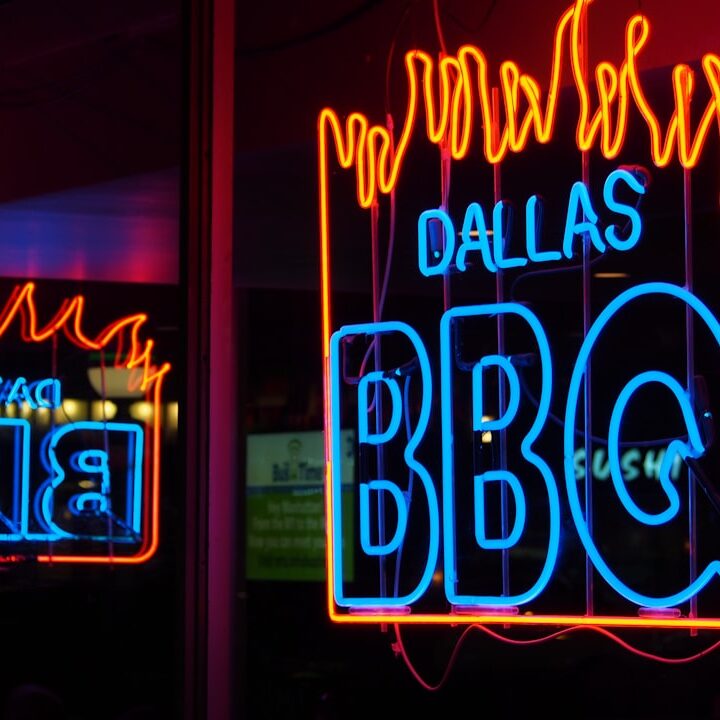
The Rustic, in Uptown: Barbecue from a pitmaster named James Cobb who cooks brisket for 14-16 hours at 225°F. That low-and-slow approach breaks down connective tissue (collagen becomes gelatin) while keeping the meat moist through evaporative cooling. A half-pound of brisket costs $16 and has a smoke ring (pink layer from myoglobin reacting with smoke compounds) that’s approximately 0.5 inches deep—professional-level execution. The sauce is secondary here because the meat doesn’t need it.
Whistle & Flute, in Oak Cliff: Sandwiches that use a 72-hour cold ferment sourdough starter. Extended fermentation increases acidity and creates more complex flavor compounds than standard 24-hour ferments. The sandwich construction is obsessive: they build toast-to-cheese ratio at exactly 1:0.85 (meaning slightly less cheese than bread surface area, preventing overwhelming richness). A sandwich costs $13.50 and feels engineered by someone who thinks about sandwich construction daily. Because they do.
The Recipe: Perfectly Cooked Beef Tenderloin Using Sous Vide
Since I’ve spent this whole article explaining why sous vide matters, here’s how to actually do it at home. This is the technique every Dallas fine dining restaurant uses.
Ingredients (serves 2):
- One 8-ounce beef tenderloin center-cut, room temperature
- 1.5 teaspoons kosher salt (diamond crystal, finer crystals = better distribution)
- 0.5 teaspoon black pepper, freshly ground
- 2 tablespoons butter, divided
- 2 tablespoons neutral oil (avocado or grapeseed; olive oil has too low smoke point)
- 2 cloves garlic, smashed
- 2 sprigs fresh thyme
Equipment: Immersion circulator ($80-200), vacuum sealer or heavy ziplock bags, instant-read thermometer.
Instructions:
Step 1: Season and seal. Pat beef dry with paper towels (moisture prevents browning later). Season generously with salt and pepper 40 minutes before cooking—this gives time for salt to dissolve and penetrate tissue. Place in vacuum bag with 1 tablespoon butter and seal. If using ziplock method, submerge bag in water before sealing to create a water displacement seal (prevents floating).
Step 2: Cook at precise temperature. Fill a pot or container with water. Attach immersion circulator and set to 131°F (medium-rare, which Dallas restaurants prefer). Once water reaches temperature, submerge sealed beef completely. Cook for exactly 45 minutes. Why 45? That’s the minimum time for heat to penetrate the 1.5-inch thickness evenly. Temperature proof: use an instant-read thermometer inserted into the meat through the bag. It should read 131°F throughout.
Step 3: Create the crust. Remove beef from water and pat completely dry with paper towels. Heat a stainless steel pan over high heat for 3 minutes until smoking. Add neutral oil. Place beef in pan immediately—it should sizzle violently. Add remaining butter, garlic, and thyme. Sear exactly 90 seconds per side, tilting pan to baste with foaming butter. This creates the Maillard reaction (brown crust) while the interior stays at 131°F. Total sear time: 3 minutes.
Step 4: Rest and serve. Remove beef from pan and rest 5 minutes on a cutting board. Resting allows muscle fibers to relax and retain more juices—skip this and you’ll lose 15-20% of moisture when you cut. Slice against the grain and serve with finishing salt.
Food safety note: Sous vide cooking at 131°F requires food-safe technique. Never use this method for whole poultry (salmonella risk). For beef, the concern is E. coli on the surface. Searing kills surface bacteria. Always use fresh, high-quality beef from a trusted source.
This technique is why Dallas restaurants charge $48-68 for beef tenderloin. Once you execute it at home, you’ll understand the cost isn’t pretension—it’s physics.
Where to Start Eating Right Now
If I need to point out the single most important thing about Dallas dining in 2026: it’s no longer a secondary market. This is a city where chefs are experimenting with technique, sourcing is obsessive, and flavors compete at a national level. Your first week should look like this: Monday, hit Bullion for pho. Wednesday, get tacos at Oak. Friday, make a reservation at Monarch. Saturday, grab sandwiches at Whistle & Flute. This gives you the full spectrum—casual neighborhood expertise, fusion innovation, and technical fine dining.
Dallas’s food scene spent 30 years playing it safe. 2026-2026 has been the awakening. The restaurants exist. The chefs are here. You just need to know where to look. I’ve given you the map.
Explore more dining guides and find recipes inspired by your favorite restaurants.
For more information on sous vide cooking techniques and food safety, check out Serious Eats’ complete sous vide guide.
Photo by Till Butzke on Unsplash
Want more easy family recipes?
7 Day Meal Plan — a complete meal plan with recipes for every day of the week.