Table of Contents
What Sous Vide Actually Does to Your Food
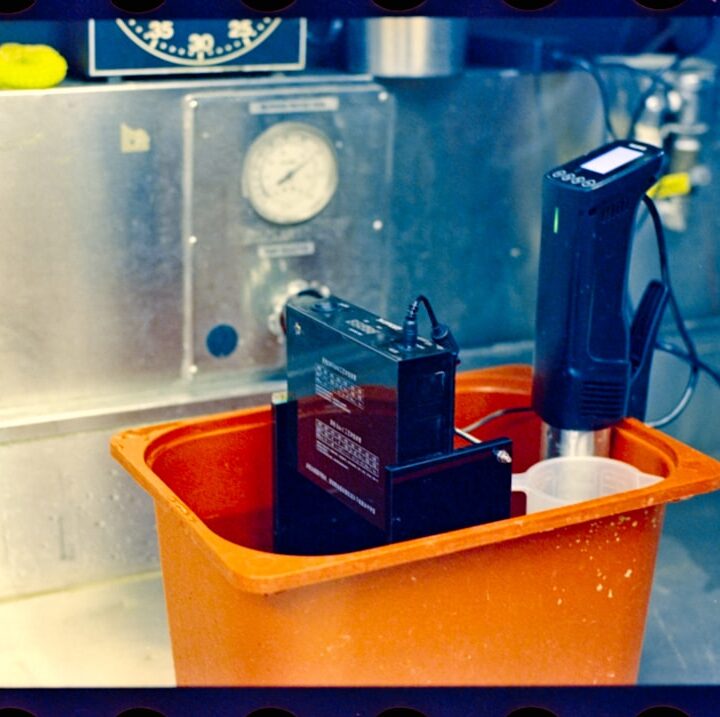
Sous vide means “under vacuum” in French. You seal food in a bag, submerge it in water heated to a precise temperature (usually between 129°F and 167°F depending on what you’re cooking), and leave it for a specific time. The water temperature never changes. Your food reaches that exact same temperature throughout—edge to edge, no gradient.
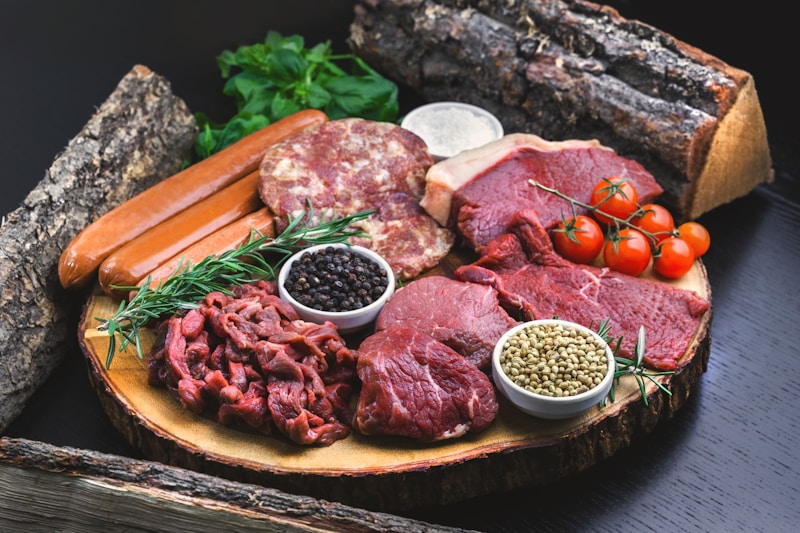
Here’s what that actually means: a steak cooked to 129°F for 2 hours will be 129°F from the surface to the center. A traditional seared steak at medium-rare has a band of 120-130°F meat in the middle, surrounded by increasingly done meat toward the crust. With sous vide, you eliminate the gradient. Then you sear it for 90 seconds in a screaming-hot cast-iron pan to build crust.
The result? Meat that’s evenly cooked. Is that better? Sometimes. Is it worth 2 hours of waiting plus equipment costs? That depends on your standards and your schedule. I’ll be direct: for a weeknight dinner, probably not. For impressing 8 people at a dinner party where consistency matters, absolutely.
The Science Behind Precise Temperature Control
Your body’s proteins denature—unfold and restructure—at specific temperatures. Myosin in muscle begins denaturing around 122°F. Collagen starts converting to gelatin around 140°F. Fat renders at different rates depending on the animal.
A sous vide water bath stays within ±0.5°F of your target temperature because the immersion circulator constantly monitors and adjusts the heating element. In a traditional oven, temperature swings by 15-25°F throughout a cook cycle. That’s why you get inconsistency.
Here’s a concrete example: A 1.5-inch-thick salmon fillet cooked at 122°F for exactly 12 minutes reaches that temperature throughout and develops that silky, custard-like texture that fish enthusiasts love. In a 350°F oven, the outside hits 140°F before the center reaches 122°F, giving you overcooked edges and undercooked center. Scientists at the University of Gastronomic Sciences tested this repeatedly and found sous vide reduced temperature variance in thick cuts by approximately 94% compared to conventional methods.
The reason this matters: protein texture depends on temperature. Precision means control over texture. You’re not really cooking “better”—you’re cooking more predictably.
When I Need to Be Honest About Sous Vide’s Real Advantages
I need to be honest: sous vide excels in three specific situations, and struggles in others.
Where it genuinely wins: Batch cooking. If you’re prepping 12 chicken breasts for meal prep and need them all identically cooked, sous vide is unbeatable. Cook them all at 149°F for 35 minutes, then sear 90 seconds per side before storing. All 12 are identical. A regular pan? You’re standing over it for 20 minutes managing heat and timing.
Where it’s overrated: Home dinners for 2-4 people. You’re spending 2+ hours cooking when a hot pan takes 12 minutes. Your Thursday night doesn’t benefit from extreme precision. Your weekend dinner party does.
Where it fails completely: Vegetables. Carrots, Brussels sprouts, brocoli—they need the Maillard reaction (browning) to develop flavor. Sous vide can’t brown anything. You finish them in a pan anyway, negating the time advantage.
Budget consideration: A good immersion circulator costs $80-180 (Anova is solid around $120). If you use it twice a month at 2 hours per session, that’s 24 hours annually cooking food that you could cook in 8 hours with traditional methods. You’re spending $5-7.50 per hour to save… 0 hours (you still cook, just differently). The value proposition only makes sense if you view consistent results as worth premium time.
Perfect Sous Vide Salmon: A Technique You Can Actually Use
Let me give you a recipe that shows when sous vide genuinely shines: salmon for 4 people, all cooked perfectly edge-to-center.
Ingredients:
- 4 salmon fillets (5-6 oz each)
- 4 tablespoons butter, divided
- 2 sprigs fresh thyme
- 4 cloves garlic, sliced thin
- Sea salt (1/4 teaspoon per fillet)
- Black pepper
- Lemon wedges
The Technique:
Step 1: Prep (5 minutes). Pat salmon dry with paper towels. Season each fillet with 1/4 teaspoon salt and black pepper. Place 1 tablespoon butter, 1/2 thyme sprig, and 1 garlic clove in each vacuum-seal bag with one fillet. Vacuum seal using a FoodSaver or similar. Water displacement method works too: seal 3 sides, slowly submerge to push air out, seal the final edge.
Step 2: Water bath setup (2 minutes). Fill your pot with 2-3 gallons of water. Set your immersion circulator to 122°F (this gives you that silky, barely-cooked salmon restaurants serve). Let it preheat for 3 minutes.
Step 3: Cook (12 minutes).” Submerge sealed bags completely. Set timer for 12 minutes. The salmon reaches 122°F center—where you want it—and stops cooking there. It won’t overcook. Walk away. (This is sous vide’s actual advantage: zero attention required.)
Step 4: Sear (90 seconds). While it cooks, heat a cast-iron skillet over high heat until it smokes (around 450°F). Remove salmon from bags (save the liquid). Pat dry. When pan is screaming hot, place salmon skin-side-up for 45 seconds. Flip, 45 seconds. You want golden crust. Done.
Yield: 4 servings. Active time: 7 minutes. Total time: 30 minutes (including preheat).
Is this better than a pan-seared salmon? Texture-wise, yes—more consistent. Does it justify the equipment? Only if you’re cooking salmon this way twice a month or more. If you’re doing it once yearly for a dinner party, the answer is no.
Common Mistakes That Waste Your Time
Mistake 1: Not searing afterward. Sous vide produces pale, unappetizing food. You must sear. If you’re not searing, you’re eating steamed protein. That defeats the purpose.
Mistake 2: Overcooking the cook time. Sous vide doesn’t tenderize tough cuts the way low-and-slow braising does. A 2-hour cook at 165°F won’t improve a cheap steak—it’ll just waste your time. Serious Eats has tested this extensively. Sous vide works best on naturally tender cuts (salmon, scallops, filet mignon, chicken breast).
Mistake 3: Using it for everything. Grilled vegetables, pasta, bread—none of these benefit from water-bath cooking. You need browning, crust, or both. Save sous vide for proteins and tender vegetables cooked low-temperature.
Mistake 4: Ignoring food safety.** Sous vide at low temperatures (below 165°F) requires understanding pasteurization time. Cooking salmon to 122°F for 12 minutes is safe—the combination kills pathogens. But you can’t leave bags at room temperature for 3 hours before cooking. Cook immediately after sealing, or refrigerate and cook within 24 hours. USDA guidelines exist for a reason—follow them.
The honest verdict: Sous vide is a legitimate tool, not a kitchen gimmick. Use it correctly—batch cooking, proteins, precision texture—and you’ll see real results. Buy an expensive circulator expecting it to revolutionize your weeknight dinners, and you’ll be disappointed. It’s a specialist technique for specific situations, and that’s exactly what it should be.
Explore more on Recipes – Scope Digest and browse our Recipes section.
If you want to explore more advanced cooking techniques that deliver real results, check out our recipe collection for methods you can apply tonight. And if you’re interested in meal prep strategies that actually save time (unlike sous vide sometimes), our meal prep guide breaks down realistic workflows.
Want more easy family recipes?
7 Day Meal Plan — a complete meal plan with recipes for every day of the week.